Connect with us

UG Military

The NRA/UPDF military was never created for multi-party Democracy so Anite was right

The Nationalist

Published

on

A Ugandan military UPDF officer (L) disperse supporters of Ugandan opposition leader Kizza Besigye who had gathered in large numbers to welcome him back to Kampala from Nairobi on May 12, 2011 where he had gone to seek medical treatment for injuries sustained after he was attacked by state security personnel during an opposition demonstration. Ugandan President Yoweri Museveni vowed to stamp out "disrupting schemes" on May 12 as he was sworn in for a fourth term while masses of opposition supporters welcomed home his rival, Kizza Besigye. AFP PHOTO/Tony KARUMBA (Photo credit should read TONY KARUMBA/AFP/Getty Images)

Uganda political elites should stop acting like we’re in a democracy, and address the matter not the periphery. The comments made by Anite, that the “Maggye” read “army” would support (meaning enforce) or crush political/civilian opposition to the amendment of article 102 (b) to remove presidential age limit from the constitution, such comments are not mad or unfounded. In-fact, in fact they are nothing but bitter truths which Ugandan political elites pretend not to know. The NRM government came to power, not by its leader being elected into office but force of arms. It has kept power that way by now turning the arms to the civilians with opposing leadership ideas. So at what point does Anita become the problem.

Ugandan so called elites, either out of cowardice or disillusionment, try and deflect the problem, and pretend not to understand the reality they are in.

The comments are real, bitter truth with countless examples and precedence of using military force as and when the NRM is cornered in debate and politics.

An article last year appeared in Foreign Policy, published under the title: Is the U.S. Military Propping Up Uganda’s ‘Elected’ Autocrat? in which the writer noted clearly that Ugandan security forces totally disregard democratic rules.

So why is local media focusing on calling her out and trying to get her to dismiss her remarks, yet they are backed by facts and Uganda’s army has never left politics?

Ugandans should discuss the subject matter and call out the NRA cum UPDF itself, because its officers are on camera actively engaging in politics in favour of the regime.

Most security organs of the state, including police, intelligence agencies, land forces, air forces, reserve forces are not lacking full-time regime ‘cadres’, doing political work both within the military and with the public. Kakooza mutable, for example a high ranking officer in the army, who was seen on national television, training militias to fight for the regime in the last election, and giving warnings to opposition politicians.

So, please media and elites discussing this matter, it is not Anite the problem. It is that ever since the country fell to the NRA army and it took over government, keeping the power became the new mission of the armed former rebels. They see it as their right to do so because they did not get the power by ballot in the first place. All the resulting, concocted forms of government preferred by the regime have been quasi-military. Stop confusing yourselves. You’re not in a democracy. If you’re going to remove the regime, then you must contend with its military as well. Without a plan for winning over or dealing with the regime’s military, the plans are incomplete and subject to fail, because the regime will call in the military in as if it is a national service, to protect it from civilian takeover.


Loading

Devotion to the interests and culture of our nation and the interests of our countrymen and women. Our political, social, and economic system should promote Ugandans to self-govern

Opinion

Rwabwogo’s Discourses on Ugandan Society

Birondwa Frank

Published

on

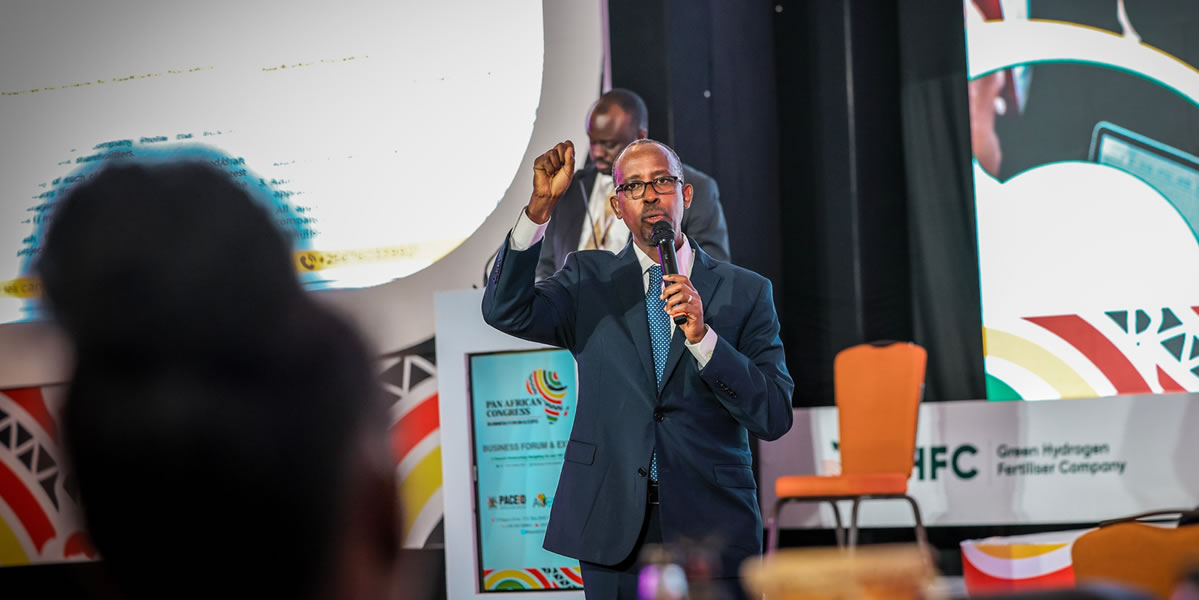
Odrek Rwabwogo Pan African Congress

I have followed Rwabwogo’s approach to societal transformation for a while now, through his online channels and his book, Fat Cats & African Farmers: Speeches & Stories. As an entrepreneur, I admire his commitment to transforming what could otherwise remain theoretical ideas into practical, market-ready goods, services, and leadership principles.

The term “transformation” has been thrown around a lot in our political discourse, but it has a more grounded meaning in science. Those with a bit of biology know about altering organisms in their genetic makeup(DNA), resulting in the acquisition of new traits, creation of new organisms. Chemistry demonstrates transformation when hydrogen and oxygen are seperated from water. Physics describes how matter changes states—solid, liquid, gas. The same logic that governs transformation in science also applies to transformation of society: real change requires a reconfiguration of the base structure. Rwabwogo uses the approach of ideological teachings and well-researched messaging to convey what Uganda’s economic transformation really needs —a change in mindset that begins at the family, individual to foster transformed citizens.

To give context, transformation here refers to moving Ugandan society from low productivity, high dependency, and ideological fragmentation to a state marked by high productivity, self-sufficiency, and a unified national ideology among political thinkers —differing only in methods, not vision. The goal is to enable the average citizen to make intellectual, economic, and cultural shifts, leading to a surge into the lower and upper middle-income population, through the production of standardised industrial goods, services & leadership practices.

Ideological Grounding is neccessary for Societal Transformation

Rwabwogo’s philosophy resonates with the great Western thinkers in its emphasis on substance over form. Its Uganda’s moment of the classical struggle before the first industrial revolutions in the west (18th – 19th century shift from manual production to manufacturing). Unlike populist leaders who manipulate ethnicity & poverty, Rwabwogo advocates transformation rooted in ideological clarity. For Uganda, the path of populism—appealing to ethnic identity, religious denomination identity, and to a less extent intellectual identity, has stiffled real development, much like how noise disrupts the focus needed in a scientific laboratory. Rwabwogo asserts that genuine transformation on a societal levelis about influencing behavior rather than merely enacting policies.

Our history is punctuated by phases of struggle. By the 1960s, the struggle had narrowed down to ending primitive colonialism. Ironically, while direct control of territory may have ended, the ideological colonialism persists in Uganda and in Africa.  In the 1980s, the battle evolved to confronting dictatorships & puppet governments. By 1990s the struggle centred on controlling the  exploitative elites who undermined genuine independence. Some opposition figures in Uganda partially understand the problem but often apply populist rhetoric that appeals to ethnicity, ignorance, social misery of the lower class and greed of the middle class. Without ideological clarity, political movements devolve into sectarianism, and divert people to unprincipled conflicts, as seen in our neighboring region.

The Work of Transformation: A Societal Laboratory

True transformation demands intellectual rigor. Reforming outdated educational curricula, schools, and universities is one step. Reforming culture to embrace a Pan-African view of ethnicity. Using software technology to implement transparency in local and national government processes to prevent corruption before it happens, rather than simply creating anti-corruption agencies.  The intellectual labor required for transformation, encompasses Ugandans contributing knowledge for national advancement in Political System, Economic System, Social and Cultural system, International Policy System

Resisting Foreign Exploitation

We must dismantle the structures left behind by imperialists that exploit trade, labor, education, and language for imperial gain, leaving African societies weakened. Transformation means dismantling these structures that persist in our systems. I recently read about President Museveni’s 1971 thesis, Fanon’s Theory of Violence: Its Verification in Liberated Mozambique, which reflects the ideological roots of the NRA/NRM movement. But now what is role of this ideology, in the context of ruling a complex, industrialising Uganda.

For Uganda to progress, every citizen must be invested in the intellectual work of transformation. Only through widespread, rooted ideological understanding can violence cease to be the default mechanism for peace. Whether it’s Nyanzi’s literary protests or Kyagulanyi’s ethno-nationalistic rallies, these by themselves do no solve the inherent need for comprehensive societal transformation. It is one thing to know

Muhoozi vs. Rwabwogo

Ugandan millennials like the gossip columns, better than serious textbooks. But I’m sorry this article isn’t about the publicized spats between Rwabwogo and Gen. Muhoozi Kainerugaba. It’s about the ideology each represents. I read Battles of the Ugandan Resistance: A Tradition of Maneuver by Muhoozi Kainerugaba—a well-written Ugandan military book that reads a lot like an autobiography of Gen. Salim Saleh and Fred Rwigyema, linking seamlessly with other works like Uganda’s Revolution, 1979-1986: How I Saw It by Pecos Kutesa and Sowing the Mustard Seed by Yoweri Kaguta Museveni. These books shed light on the ideology and decisions that built the UPDF into one of Africa’s greatest armies.

For true transformation, however, Uganda needs more than military reform. Scientists, technologists, business leaders, cultural and religious figures, and psychologists each play a role. Each sector must produce reformists who align with Rwabwogo’s ideological approach. Detractors claim he is overstepping long-established institutions, yet these institutions, with their lack of tangible societal impact, have no “performance authority.” Part of transformation by necessity includes dismantling old structures handed to us by those with imperial interests, now led by “intellectuals” who lack original thought.

Addressing Uganda’s “Knowledge” Deficit

Unfortunately, many Ugandans don’t read to know—they simply “know things!” This focus on hearsay overshadows substantive issues. In these books, you’ll find the ideas that built UPDF and Uganda into their current forms.

Globally, the U.S. and China clash over intellectual property, with military and economic tensions regarding alleged theft of American intellectual capital. Meanwhile, the U.S. exploits foreign countries’ resources while luring intellectuals to its borders, effectively appropriating intellectual property.

Arab societies, for example, thrive by upholding a unified religious ideology. Asian societies are more organized due to their emphasis on hard work and academic excellence. Europeans adopted an imperialist ideology. Uganda, too, needs a unifying ideology to truly transform society.


Summary and Conclusions

  • The Problem: Ugandan society suffers from low productivity and income. Politicians often exploit ethnicity for leadership, hindering progress.
  • The Solution: Focus on ideological change, akin to scientific transformation seen in biology, chemistry, and physics. Citizens must understand their roles in societal transformation.
  • The Rwabwogo Factor: Emotion- or ethnicity-based political approaches are flawed; Rwabwogo’s intellectual approach offers a refreshing alternative.
  • Historical Context: Past struggles for independence (1962) and democracy (1986) were incomplete. Colonial structures persist and must be dismantled.
  • The Opposition: While some opposition figures understand the problem, they falter by relying on populist ethnic nationalism.
  • The Need for Action: Uganda needs citizens who understand the problems and actively seek solutions, as Rwabwogo does.
  • Colonial Legacy: Colonial systems of exploitation linger, distorting education and resource use.
  • Museveni’s Thesis: Museveni’s work on Frantz Fanon highlights the risks of violence without ideological transformation.
  • Cultural Deficiency: Our cultural environment doesn’t promote critical thinking, an essential component of transformation.

Conclusion: Uganda needs a movement for ideological education to empower citizens in driving societal transformation.

Frank Birondwa M.
Pan African, Entrepreneur
birondwa@revolutionmedium.com

Loading

Continue Reading

Letter

We’re all “suitcase” Balaalo!

Birondwa Frank

Published

on

We’re all “suitcase” Balaalo - article by Birondwa Frank

Ugandans can speak a lot of English, but scratch the surface a little bit and you’ll find that we do not exactly think, behave, or execute like the British. So we have people trapped in this one-dimensional imitation of Europeans which stops at speaking the language. This has effect of creating dystopian individuals who are a danger to their African society. Educated but not able to manufacture anything, read but don’t know what works, and finally settling down to good old corruption – the lifecycle of a dystopian English imitating African.

Take those fancy English speeches about the “Balaalo” in Acholiland, for instance. While the reality is that Ugandans actually move on a daily basis to and from all corners of the country and settle freely in any part of the country, the discussion on what is essentially the internal migrations of Ugandans, is now suddenly a Shakespearean tragedy.

I have often said that it is a necessary move to make MPs talk about issues in their mother tongues. This would make it easier for them to detect their own idiotic arguments, because they would likely be surrounded by people not from their area. Discussing local issues in English as an African loses so much context.

The narrative of “Balaalo Must Go” which is being force-fed into the psyche of society, is straight out of a fascist playbook and it deserves a good old NRA-style resistance. 

Firstly, the term “Balaalo” itself is a diminutive that has often been used to insult; it’s not the same as “Balunzi”. And yet it’s being paraded as a legitimate way to describe the socio-economic life of Banyankole and Banyarwanda cattle keepers. Conversely, if you started calling people “Abalimi” in parliament just because they grow sweet potatoes, cassava, and beans for a living —it would be offensive. So in this particular case, the educated Ugandans see it okay to bring cultural swipes onto the national stage.

Secondly, take this Christmas holiday we’re in as an example. You will find that this is a time for Ugandans to massively migrate internally. Ugandans instinctively participate in a large scale urban-rural migration exercise during these times, turning cities into ghost towns. Where do they come from? What causes this mass movement? Is this temporary or a permanent feature of Ugandan society structure?

These seasonal movements of people would have given perspective to the nature, extent and character of the internal migrations that Ugandans usually do. But our English imitating folks who see things as if they’re the London School of Economics, will leave this small detail out of the discussion. What are you doing in the judiciary, parliament, executive and elsewhere if you cannot bring context to society’s primal problems?

So I think the issue of so called Balaalo moving to any part of Uganda or East Africa, has been mis-defined, mis-characterized

The difference between the rural-urban migration during Christmas season by  people with fancier suitcases and slightly less mooing, and the migration of “Balaalo” is that Balaalo move with their cattle, but otherwise it stems from the same primal cause – economic nomadism. Balaalo are shepherds of animals, and looking for greener pastures for their animals is part of their social-economic life cycle. 

If going miles away from your birthplace with a suitcase to find a job, start a business, visit a family, etc.  doesn’t make you “Balaalo,” but moving with animals does, then you’ve misunderstood your society’s superstructure. 

Kyagulanyi Sentamu, the NUP guy from the Ghetto, recently talked about “abatunuza amannyo” (those who look with their teeth)  in his Luwero vitriol.

These are obvious attempts at political tribal sentimentality, lacking deep ideological solutions and Pan African spirit. 

So the next time someone throws around “Balaalo” like a political insult, remind them: they’re just suitcase Balaalo themselves. Start appreciating the complex ecosystem that keeps this crazy, wonderful country tick.

But most importantly, let’s ditch the tribal vitriol and study the real deal. Cattle keepers, farmers, and the land itself – they’ve been dancing tango for centuries, creating a food production ecosystem that’s the envy of the region.

Have these English imitators ever studied how Ankole region bypassed Buganda region in the production of Matooke, a Buganda staple? I haven’t seen their papers on how farmers who have never used any fertilizer continue to get bumper harvests from their land? Those who make a living by cultivating – “Abalimi”, obviously prefer land which has been farmed on with cattle, because it is very fertile, and cattle-trampled ground is much more cultivable than a wild bush. It is more difficult for cultivators to open a bush which has never been farmed, into food gardens. So the ecosystem has been that where balaalo move, cultivators follow, and intensive cultivation follows.

Niba rero Acholiland ishaka kuzamura ubuhinzi, bagomba guha ikaze Balaalo amaboko afunguye (nimirima irimo ubusa). Bazakomeza amaherezo, bakurikize injyana ya kera, itavuzwe. Aho guta igihe hamwe nicyongereza cyiza nuburakari, reka twinjire mumateka nyayo y’aka karere. Reka dushyireho amategeko arera iyi ecosystem.

Kandi kuri iyo nyandiko, gira kwimuka utekanye na Noheri nziza, mwebwe banyenduga b’amavalisi!

Translations / Tafsiri / Enkyusa/ Ibisobanuro/ Enzivuunula

Loading

Continue Reading

Trending

pendik escort kartal escort beylikduzu escort şirinevler escort