Connect with us

Global Politics

When will Uganda’s “bourgeoisie” join the peaceful revolution?

Revolution Media Reporter

Published

on

When will Uganda’s “bourgeoisie” join the political revolution?

Uganda’s “Working Class” – is some of the most submissive people on the planet. A history of brutal presidents has taught the populations to always run into hiding, and keep quiet about the egregious acts and conduct of the leaders.

This does not spare the “learned” “intellectuals” “working class” “business community”, “the bourgeoisie” class of the country.

The presidential age is about to be expunged from the constitution- one would imagine that this is the last straw, the intellectuals are finally going to take a stand against the regime and act.

Whereas some politicians have come out and and said this is a “do or die” moment, and have already fought in parliament to stop it – this is too little too late.

This resistance against the regime slipping the country into anarchy, has the potential to get the full backing of the masses, and mass action, but the bourgeoisie are dead silent. No voicing, no sponsorship, no demonstration, no pulling services, no withdraw of workforce – it is business as usual.

Uganda would have the same political type as North Korea other kleptocracies (rule by thieves), where the state is the one which decides the political rights of  the people – as opposed to democracy where the people are in control of political destiny of the country.

What is surprising is that there are ‘political elites’ on each side of this discussion, although the regime elites are relying more on the regime military groups to marshal the opponents while the bill read or ‘debated’.

There are very many observations that have been made, as the cause of Uganda’s degeneration from the democratic promise ushered in the 1986 revolution. And that is that the political class and working class have remained complacent as freedoms of assembly, free speech, mobilization, representation, justice, were being taken away by the state, and vested in the hands of the regime leaders. All institutions

  • Police
  • Army
  • Judiciary
  • Parliemnt
  • Civil Service

It is hard to find them working for the people.  This is because the educated, have become complacent in this crime. The biggest contribution they can do is a Facebook post.


Loading

Continue Reading
Click to comment

You must be logged in to post a comment Login

Leave a Reply

Global Politics

Israel: The Homeland for Jews

Birondwa Frank

Published

on

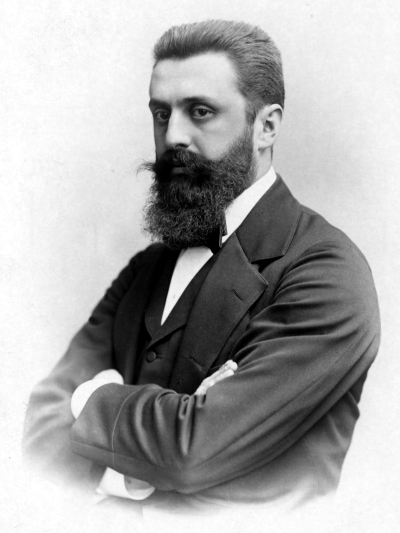
The creation of the State of Israel in the 22,145 square kilometers between the Mediterranean Sea and the River Jordan is often portrayed as a convergence of Jewish aspirations, as articulated in Theodor Herzl’s 1896 manifesto Der Judenstaat (“The Jewish State”), and the political support of the British government through the Balfour Declaration of 1917. However, the land in question was not an empty space awaiting new inhabitants—it was Palestine, historically referred to as Canaan, the Promised Land.

Britain, holding a mandate over Palestine from 1920 to 1947 under the authority of the League of Nations, facilitated the partitioning of this land. This political maneuver laid the groundwork for the establishment of Israel but also ignited tensions between Arabs and Jews—tensions that endure to this day. The Jewish return to Palestine, though enabled by British and international politics, was not just a matter of politics; it was deeply rooted in religious history and identity.

But why did the Jewish people seek Britain’s backing, and later the support of the United Nations, to reclaim their ancient homeland? This question points to the intersection of politics and religion, a mix that has proved volatile in this region. The Jewish connection to Canaan—dating back thousands of years to biblical times—was a driving force, but the modern political context required international legitimacy and support. Herzl understood this when he sought to secure formal agreements from “the present masters of the land.” However, it was not just a matter of legal approval; it was about creating a framework that would allow for the survival and security of a future Jewish state.

The broader regional context is crucial here. The countries surrounding modern Israel are predominantly Muslim and governed by principles deeply rooted in Islam. The notion of creating a Jewish state in the heart of this region was not only a political challenge but a religious one. Arab opposition to the establishment of Israel stemmed, in part, from religious conviction—Israel’s existence challenged the Muslim claim to the land. Yet, the Arab world’s failure to make a robust religious argument against the Jewish return to Canaan, and instead focusing solely on the political mechanism, was perhaps a strategic error. By neglecting to challenge the religious foundation of the Zionist claim, they ceded crucial ground in the ideological battle.

Meanwhile, Britain’s motivations in supporting the Jewish cause were not purely altruistic. During World War I, Jewish leaders in Britain, including the influential Lord Rothschild, provided resources and support to the British war effort. The Balfour Declaration, in which Britain expressed its support for a “national home for the Jewish people,” was as much a political favor as it was a recognition of Jewish historical ties to the land. In this light, Britain’s role in the creation of Israel can be seen as an exercise in realpolitik, where self-interest and wartime alliances played a significant role.

Jewish determination, however, transcended diplomatic support. Herzl’s vision was clear: even if Britain and the United Nations had not endorsed the creation of Israel, the Jews would have pressed forward with their plan. The Zionist movement was not merely about securing a piece of land—it was about reclaiming a national identity, fulfilling a historical destiny, and establishing a sanctuary for Jews in the wake of centuries of persecution, culminating in the Holocaust.

Moreover, the cultural and religious identity of the Jewish people played a critical role in shaping their aspirations. Jews are not Christians, and they do not recognize Jesus Christ as the Messiah—a key theological divergence that has historically set them apart. This strong sense of identity, rooted in Judaism, fueled the Zionist drive to establish a homeland that reflected their ancient beliefs and traditions. Their resistance to assimilation, both politically and religiously, has been a hallmark of Jewish history.

Loading

Continue Reading

Global Politics

EAC Integration cannot stand on broken Constitutions

The Nationalist

Published

on

EAC Integration cannot stand on broken Constitutions

The geographical expression known as East Africa, has had the big dream of one day becoming an integrated, economic, cultural, and political entity with a single military parade, since the creation of these republics as  independent states in the 1960s. The African cultures and African languages spoken here are not identical, but from the beginning the leaders knew that these republics had real connections among their people – in fact some dreamed of an all-africa republic.

Why is it then, that these dreams have never been realised? Why is is that all the potential of an entity as big as that, lays wasted? All the regimes that come, they make some sort of attempts to form the one republic but fail flat.

The cause of this failure is that the state of politics – when you get down to the nitty-gritty of how governance is practiced  in each of the East African Community intending countries, there in lies the seeds of discord, which have prevented  the region from being a truly unified Geopolitical country. There are not rules the leaders stick to, everyone makes and breaks the rules as and when it fits, no proper rule of entrenched to follow.

Becoming a single-state, under a single political administration, covering six countries (Kenya, Tanzania, Uganda, Rwanda, Burundi, South Sudan) would be a monumental achievement, but the countries do not share a common and just political philosophy. The architectures and ideology in some of the countries are not based on popular beliefs, neither are they entrenched in human freedoms and rights, the people are ruled over

And yet the most interested countries, by expressions of their leaders, have leaders who have never conformed to civil rule. They have practiced from mild to full bloody military dictatorships. Uganda, Rwanda, Burundi and South Sudan fall in this trap. Tanzania and Kenya have had some basic common sense civilian leadership style, even though Tanzania’s socialist history may a big problem coming around to fly capitalist Kenya. These others, even though the leaders may tolerate each other for the duration of a conference or  a state visit, that is about all, do not read much into it. Any moment the leaders, especially these ex-military, self-crowned generals, even if they put on suits, underneath they have camouflage. They used guns to obtain the power they have, and can only use military platoons to codon off political power here, extinguish competition there, and any form of real competition based on ideas, does not stand a chance.

Moreover it is these same leaders who clamour the most, and potend to love African unity. Maybe in their whitewashed brilliant image, they think they can compete favorably on a wider canvas, but not knowing that in real sense, having failed to compete favorably at home, renders them incapable of competing on a wider canvas for political power.

How then can they participate in a geo-political government, where the people and they system would not tolerate  dictatorship?

Political integration, bringing together people across the cultures and political persuasions, this is the work of stable leaders, who are well practiced in common decency and democratic rule. It is not the work of former rebels or generals.

The countries of Uganda, Rwanda, Burundi and South Sudan have never known democracy; presidents are propped by military, and run quasi-military governments.

Kenya and Tanzania, with poor their democracy but having managed to de-link military from politics, and better structured intelligence forces, from full time engagement in partisan politics.

As it stands, this dream is unrealistic under the current prop of leaders, owing to the very basic reality of their own leadership styles.

Loading

Continue Reading

Trending

pendik escort kartal escort beylikduzu escort şirinevler escort