Connect with us

News

Publish Your Opinion – It’s Free

Revolution Media Reporter

Published

on

Are you a political thinker, writer, economist, military analyst, or have an interest in governance of your country? We invite you to publish your well researched, well written analysis on social, political, economic, military issues, and your articles will be read by more than 1 million people who visit our website website monthly. Send your article with a picture to guest@revolutionmedium.com

We invite you to publish your onion as a well-written Article, Letter or News Item on this website. We encourage use of local languages, using mother tongue is any language

Or Please register as an Author, Here!

and have user account on this website, which allows you to compose and publish your article, with immediate going live.

Here our Author Guidelines which can help you, before submitting your first article

Alternatively, you can send your Article in E-mail, Word or PDF attachment to our publishing desk: guest@youngrevolution.org. The e-mail should contain;

  • Article (Subject/Title/Heading, no more than 600 words article)
  • An original picture to accompany the article
  • Your recent photo, to add to your profile. An account can also be created and detailed e-mailed to you.

Young Revolution website traffic

  • 1 Million Monthly page views,
  • 30 minutes duration average,  per reader session

It is FREE to publish on Young Revolution website. Once first article is received, we add you as a user and setup your user details and send them sent to you, which enable you to post your articles immediately!

Our Readers

Our readers are young people who wish to have a grasp of political, economic, military, social strata of Uganda as they ponder for solutions and answering the greatest questions of their time

Publish your Article

Loading

Continue Reading
5 Comments

You must be logged in to post a comment Login

Leave a Reply

Global Politics

Israel: The Homeland for Jews

Birondwa Frank

Published

on

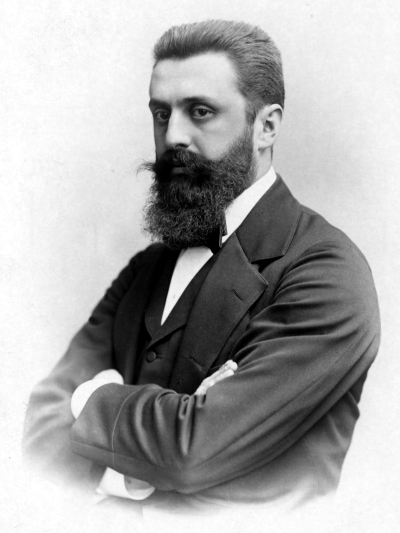
The creation of the State of Israel in the 22,145 square kilometers between the Mediterranean Sea and the River Jordan is often portrayed as a convergence of Jewish aspirations, as articulated in Theodor Herzl’s 1896 manifesto Der Judenstaat (“The Jewish State”), and the political support of the British government through the Balfour Declaration of 1917. However, the land in question was not an empty space awaiting new inhabitants—it was Palestine, historically referred to as Canaan, the Promised Land.

Britain, holding a mandate over Palestine from 1920 to 1947 under the authority of the League of Nations, facilitated the partitioning of this land. This political maneuver laid the groundwork for the establishment of Israel but also ignited tensions between Arabs and Jews—tensions that endure to this day. The Jewish return to Palestine, though enabled by British and international politics, was not just a matter of politics; it was deeply rooted in religious history and identity.

But why did the Jewish people seek Britain’s backing, and later the support of the United Nations, to reclaim their ancient homeland? This question points to the intersection of politics and religion, a mix that has proved volatile in this region. The Jewish connection to Canaan—dating back thousands of years to biblical times—was a driving force, but the modern political context required international legitimacy and support. Herzl understood this when he sought to secure formal agreements from “the present masters of the land.” However, it was not just a matter of legal approval; it was about creating a framework that would allow for the survival and security of a future Jewish state.

The broader regional context is crucial here. The countries surrounding modern Israel are predominantly Muslim and governed by principles deeply rooted in Islam. The notion of creating a Jewish state in the heart of this region was not only a political challenge but a religious one. Arab opposition to the establishment of Israel stemmed, in part, from religious conviction—Israel’s existence challenged the Muslim claim to the land. Yet, the Arab world’s failure to make a robust religious argument against the Jewish return to Canaan, and instead focusing solely on the political mechanism, was perhaps a strategic error. By neglecting to challenge the religious foundation of the Zionist claim, they ceded crucial ground in the ideological battle.

Meanwhile, Britain’s motivations in supporting the Jewish cause were not purely altruistic. During World War I, Jewish leaders in Britain, including the influential Lord Rothschild, provided resources and support to the British war effort. The Balfour Declaration, in which Britain expressed its support for a “national home for the Jewish people,” was as much a political favor as it was a recognition of Jewish historical ties to the land. In this light, Britain’s role in the creation of Israel can be seen as an exercise in realpolitik, where self-interest and wartime alliances played a significant role.

Jewish determination, however, transcended diplomatic support. Herzl’s vision was clear: even if Britain and the United Nations had not endorsed the creation of Israel, the Jews would have pressed forward with their plan. The Zionist movement was not merely about securing a piece of land—it was about reclaiming a national identity, fulfilling a historical destiny, and establishing a sanctuary for Jews in the wake of centuries of persecution, culminating in the Holocaust.

Moreover, the cultural and religious identity of the Jewish people played a critical role in shaping their aspirations. Jews are not Christians, and they do not recognize Jesus Christ as the Messiah—a key theological divergence that has historically set them apart. This strong sense of identity, rooted in Judaism, fueled the Zionist drive to establish a homeland that reflected their ancient beliefs and traditions. Their resistance to assimilation, both politically and religiously, has been a hallmark of Jewish history.

Loading

Continue Reading

Letter

Opposition should protect its Own!

The Nationalist

Published

on

Opposition should protect its Own

A rare phenomenon exists in the groups opposed to the dictatorial regime in our country today, that makes them seem unfit for the great cause of liberation. Basic revolutionary code demands that a force must protect itself – its fighters, and those who support its cause, from the attacks of their common enemy.

But not Ugandan opposition groups. They view this – protecting the revolution, as the concern of each independent opposition group or person. This is also how they approach the task of liberating the country – going it solo!

They meet, “agree”, even “sign”… and yet before the sun goes down they lie, cheat and betray themselves.  Every day they say “all we want is to – overthrow this dictatorship, create authentic democracy and protect you.

Unless we believe that logic works the same way the chameleon works,  personally I don’t think protection, or democracy could come from one who does not stand on a principle for a full day!

It is because of believing such fallacies (misconception resulting from incorrect reasoning), that those who fought the 1980-86 struggle,  ended up creating bufere democracy and a mafia state 

We all know that the opposition parties/group/camps do not agree (consent), on pretty much anything, it doesn’t matter if they claim to agree, because the actions give it away, but the protection of revolutionary fighters like Nyanzi, and the supporters of the revolution – this is so pertinent that a mutual defense pact needs to be in place, for a common response against the strikes of the mafia regime, against them.

Protecting your own is a cardinal principle in revolutionary politics. Not only locally, but also regionally. The popular rebellion in Sudan North should by now have benefited from loud voices of support from Ugandan opposition.

How to do it – protecting fighters is protecting the revolution

The strategy of political opposition in Uganda should be broad in its coverage of political matters, and all inclusive in terms of its appeal.

Exposing the evils of the junta regime locally, regionally & internally

The opposition groups should seize every incident of the mafia and junta regime, each time they unleash terror against the citizens, killing of innocents, jailing innocents, and using the judiciary system as tools of political oppression. The opposition should seize each and every incident of these to decisively record, report and expose it across all corners of the country, the region and the international forums. This is a core function of peaceful opposition, and it should not be done without coordination of the groups, but all opposition players should have a common approach to exposing the regime. The junta regime loosing credibility locally, regionally & globally for its jailing opponents, activists, shutting businesses of those perceived to be not supporting the military junta in private sector, stiffing free speech by shutting newspapers and radios, and creating  sub-human conditions for citizens in hospitals, schools, jails – these serve as material to build the right momentum for popular liberation of the country.

Pinning down the Individuals who carry out injustice

The individuals within the junta regime who are the executioners and purveyors of injustice who carry out the matching orders from the political junta, against citizens, should be meticulously recorded in the black books of Uganda’s history.  Their names should be mentioned out out of the noise and cries they met on innocents, to be on the record as tools of political persecution, so that they may not escape justice when the junta can no-longer protect them. The opposition needs to be meticulous, thorough and scientific when pinning injustice to the real individuals who carry them out, and all their assistants – you cannot bring justice to a land without pinning the ones who committed the injustice. So all those members in the army, police, intelligence, judiciary and other areas of the junta state who are doing the work of political mercenaries should be well documented and exposed to the public, for the day of reckoning

Again this something that all political opposition would find common ground on, since they’re affected by it, so a common approach and efforts to doing it is the right answer to protecting themselves against the excesses  of the junta regime

It is not logical to say say: we’re going to win the coming election, if you cannot win personal freedom first. Obviously you’re not allowed to mobilise for the said election. If as opposition politician, your personal freedom is debatable, then by all means your mission is not winning elections, it is winning freedom!

Do not claim on the podium, to be the poster child of certain values, while in fact, there is no evidence of you having put such values in action


Loading

Continue Reading

Trending

pendik escort kartal escort beylikduzu escort şirinevler escort