Connect with us

Global Politics

The “GAPS” are in NRM “IDEOLOGY” itself

Young Revolutionary

Published

on

It is not the youth lacking ideology, but NRM ideology is flawed, here are the arguments

The problems facing Uganda are not “gaps”. Let us just call them that – the problems facing Uganda. They are leadership problems, or problems caused by leaders. The right way to think about these problems, is first to acknowledge that they affect every body irrespective colour, shape, worship, political party. Second is to acknowledge that; therefore the work of changing to good leadership, developing the economy, modernizing the infrastructure, transforming the social economic state of the people, industrializing the nation, securing the country, creating space, is essentially the work of every Ugandan – not a particular group of people or even regime. Every human being who is lucky enough to be born, get raised, emigrate to or otherwise permanently reside within the geographical borders of Uganda, is the right person to solve Uganda’s problems. We need to be firmly aware of this and not be bamboozled by any politician or regime.

So, if there is an “ideology” out there that says the problems affecting Uganda are due to “gaps” within a particular group of people or regime, wrong! They are due to Ugandans making bad decisions on leadership. It is not the work of particular individual, group or regime, it is the work of all of us citizens. A Ugandan is the person on whom the heavy work of developing Uganda squarely resides.

It takes the sweat, blood, tears and ingenuity of every Ugandan, on a daily basis, to produce the resources needed to develop Uganda. Whether NRM exists or not in that sense, is totally irrelevant to the equation. If you were to write a mathematical formula to develop Uganda, you world not write NRM anywhere. And it certainly would not be an NRM leader to write it.

Ugandan economy today, as it was before, is still in the category called “heavily indebted poor countries”, contrary to the so called “ideology” of the regime. The regime has been surviving of AID, Loans and swindle of local taxes.

Regime politicians keep saying Uganda is almost a middle income country by now, and is on its way to become “first world country”.  Only hubris can lead one to make this categorization, and only a porridge head would believe them. Middle income countries today are the likes of Russia and China! Our economy is not engaged in production, manufacturing and export to even a tiny margin of what middle income countries above are engaged in. Even lights at home or on the streets can barely stay on for 12 hours straight.

So these are not gaps in a political party, they are gaps inherently within the thinking of the leadership.

Another example which shows a serious thinking problem with the regime is that they have been trying to take credit for population growth in Uganda! Seriously citing population figures, they say population growth is due to their good policies. Unless one has porridge in the head, even if you consider South Sudan, which has been in active war for the last 45 years, its population has grown! It was 3.9 million (in 1972), 5.2 million (in 1983) and 12.4 million (in 2015).  Population of Uganda was 9.9 million (in 1972), 13.7 million (in 1983) and 39.0 million (in 2015).

So under what circumstances would a population of a country not grow? Even in war population will increase, you can’t say I led to population growth because I did not kill most of the people during this and this time! I think it is lack of scientific analysis of its own efforts, and relying on “ideology” rather than science, that the promoters of NRM become megalomaniacs (pathological egotist).

Let us consider per citizen income in a typical middle income country. The monthly income of the average citizen is not less than UGX 3,858,087/ in a middle income country. That’s the average person, monthly income.

So, what is the percentage of the same Ugandan, those earning about 4 million from all their sources put together per month, including profits from business? If you get the correct percentage of Ugandans who earn between 3,500,000 – 4,000,000/ per month, and that percentage is way above 70%, then you have a middle income country or you’re near it. If not, then you have an NRM “ideology”.

So it is not correct to assert that Uganda’s problems are just “gaps” of the regime. These are mega failures on the part of the regime yes, but then also they bear on all of us citizens. We can’t leave it to NRM to solve, it is beyond a mere group of people. It is too important for the health and future of the country.

The role of the government in power is to help you and me, the citizens to develop our country with the utmost ease and speed possible.  The degree to which it does that, is the degree to which the country develops. That is the science. In Africa only Ghana is middle income – mostly due to the state of its democracy.

You can’t say that NRM is the one to develop the country, using whose money? Using whose natural resources? Using whose knowledge? That is a good example of the wrong ideology. It is even incomprehensible how learned people can continue rendering ANY service to this regime. It is not an intelligent practice.

The NRM have confused, or rather cunningly infused, their fight for power, as one and the same with the struggle to make Uganda a modern country. The two are different, we the people must know this. It is our work – in the economic, social and political spheres that can and that will develop the country.

Loading

Continue Reading
Click to comment

You must be logged in to post a comment Login

Leave a Reply

Global Politics

Israel: The Homeland for Jews

Birondwa Frank

Published

on

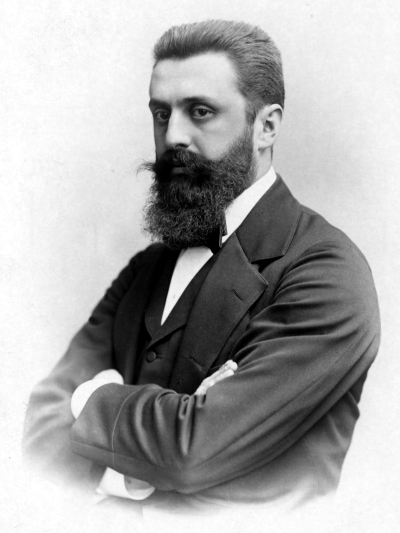
The creation of the State of Israel in the 22,145 square kilometers between the Mediterranean Sea and the River Jordan is often portrayed as a convergence of Jewish aspirations, as articulated in Theodor Herzl’s 1896 manifesto Der Judenstaat (“The Jewish State”), and the political support of the British government through the Balfour Declaration of 1917. However, the land in question was not an empty space awaiting new inhabitants—it was Palestine, historically referred to as Canaan, the Promised Land.

Britain, holding a mandate over Palestine from 1920 to 1947 under the authority of the League of Nations, facilitated the partitioning of this land. This political maneuver laid the groundwork for the establishment of Israel but also ignited tensions between Arabs and Jews—tensions that endure to this day. The Jewish return to Palestine, though enabled by British and international politics, was not just a matter of politics; it was deeply rooted in religious history and identity.

But why did the Jewish people seek Britain’s backing, and later the support of the United Nations, to reclaim their ancient homeland? This question points to the intersection of politics and religion, a mix that has proved volatile in this region. The Jewish connection to Canaan—dating back thousands of years to biblical times—was a driving force, but the modern political context required international legitimacy and support. Herzl understood this when he sought to secure formal agreements from “the present masters of the land.” However, it was not just a matter of legal approval; it was about creating a framework that would allow for the survival and security of a future Jewish state.

The broader regional context is crucial here. The countries surrounding modern Israel are predominantly Muslim and governed by principles deeply rooted in Islam. The notion of creating a Jewish state in the heart of this region was not only a political challenge but a religious one. Arab opposition to the establishment of Israel stemmed, in part, from religious conviction—Israel’s existence challenged the Muslim claim to the land. Yet, the Arab world’s failure to make a robust religious argument against the Jewish return to Canaan, and instead focusing solely on the political mechanism, was perhaps a strategic error. By neglecting to challenge the religious foundation of the Zionist claim, they ceded crucial ground in the ideological battle.

Meanwhile, Britain’s motivations in supporting the Jewish cause were not purely altruistic. During World War I, Jewish leaders in Britain, including the influential Lord Rothschild, provided resources and support to the British war effort. The Balfour Declaration, in which Britain expressed its support for a “national home for the Jewish people,” was as much a political favor as it was a recognition of Jewish historical ties to the land. In this light, Britain’s role in the creation of Israel can be seen as an exercise in realpolitik, where self-interest and wartime alliances played a significant role.

Jewish determination, however, transcended diplomatic support. Herzl’s vision was clear: even if Britain and the United Nations had not endorsed the creation of Israel, the Jews would have pressed forward with their plan. The Zionist movement was not merely about securing a piece of land—it was about reclaiming a national identity, fulfilling a historical destiny, and establishing a sanctuary for Jews in the wake of centuries of persecution, culminating in the Holocaust.

Moreover, the cultural and religious identity of the Jewish people played a critical role in shaping their aspirations. Jews are not Christians, and they do not recognize Jesus Christ as the Messiah—a key theological divergence that has historically set them apart. This strong sense of identity, rooted in Judaism, fueled the Zionist drive to establish a homeland that reflected their ancient beliefs and traditions. Their resistance to assimilation, both politically and religiously, has been a hallmark of Jewish history.

Loading

Continue Reading

Global Politics

When will Uganda’s “bourgeoisie” join the peaceful revolution?

Revolution Media Reporter

Published

on

When will Uganda’s “bourgeoisie” join the political revolution?

Uganda’s “Working Class” – is some of the most submissive people on the planet. A history of brutal presidents has taught the populations to always run into hiding, and keep quiet about the egregious acts and conduct of the leaders.

This does not spare the “learned” “intellectuals” “working class” “business community”, “the bourgeoisie” class of the country.

The presidential age is about to be expunged from the constitution- one would imagine that this is the last straw, the intellectuals are finally going to take a stand against the regime and act.

Whereas some politicians have come out and and said this is a “do or die” moment, and have already fought in parliament to stop it – this is too little too late.

This resistance against the regime slipping the country into anarchy, has the potential to get the full backing of the masses, and mass action, but the bourgeoisie are dead silent. No voicing, no sponsorship, no demonstration, no pulling services, no withdraw of workforce – it is business as usual.

Uganda would have the same political type as North Korea other kleptocracies (rule by thieves), where the state is the one which decides the political rights of  the people – as opposed to democracy where the people are in control of political destiny of the country.

What is surprising is that there are ‘political elites’ on each side of this discussion, although the regime elites are relying more on the regime military groups to marshal the opponents while the bill read or ‘debated’.

There are very many observations that have been made, as the cause of Uganda’s degeneration from the democratic promise ushered in the 1986 revolution. And that is that the political class and working class have remained complacent as freedoms of assembly, free speech, mobilization, representation, justice, were being taken away by the state, and vested in the hands of the regime leaders. All institutions

  • Police
  • Army
  • Judiciary
  • Parliemnt
  • Civil Service

It is hard to find them working for the people.  This is because the educated, have become complacent in this crime. The biggest contribution they can do is a Facebook post.


Loading

Continue Reading

Trending

pendik escort kartal escort beylikduzu escort şirinevler escort