Connect with us

UG Politics

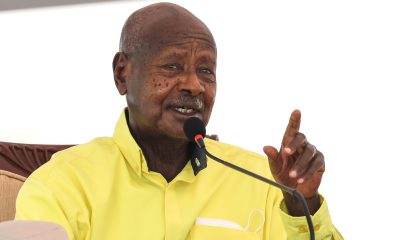
Museveni has ALWAYS been defeated in elections, even in 1980; but TRANSITION of power means the DISARMAMENT of the ruling PARTY!

Revolution Media Reporter

Published

on

History shows that from the day Museveni first stood for public office (was MP of Nyabushozi, he as always lost. Even in the so called 1980 stolen election, even if it had not been stolen, Museveni would not have become president or vice president for that matter– going by votes got.

And yet, he became president of the country five years after that election, & still is today! How?

The answer is simple – it’s called guns, arms, AK47s.

He used them to gain state power, by forcing the elected people to surrender power to him; he uses them today, to force voters to keep him in power, and to threaten all political opposition.

There is no fuss, no hidden formulae or elaborate ideology. He simply plucked the famous rule from the communist manifesto

“Every Communist must grasp the truth: Political power grows out of the barrel of a gun”

Therefore its not about the elections. The elections can change some leaders, but not him.  Therefore to take power from him, even if you’re a democrat, you must for second “grasp the truth”!

While using the gun, he also crammed an incomplete communist ideology into the heads of many. It’s hard to fathom how so many Ugandans working him actually believe that he is a democrat, or don’t care whether he is or not. Even with a long public track record of despotism, there are people who think Uganda is a democracy! We have a section of people who have grown averse to democracy.

Those who support him outside the armed guard circle, the so called “mass support” that the NRM spoke about, there are two realities which brought this about;

  1. There were many good people who were brought together by the idea that Uganda could be saved, drawn away from the narrow parochialisms that dogged politics and national governance before and after independence. These were coalesced together by the burgeoning NRA resistance of the government. They dreamed of establishing a good, open democracy where everyone could participate – this resistance war was the remover of any doubt. Those people worked so hard to make Uganda free from personal interest leaders, and to keep its governance on democratic path. Those are the people who made the people believe in NRM. This reality has since changed, over the last 20 years. Fast forward – 30 years later today, time has revealed EVERYTHING. The common dream of a proper democracy where everyone could participate has since been shelved. Those people are therefore no longer NRM, as a matter of principle.  They have been leaving it – some loudly, others quietly – but idealism left NRM. This gave way to a new credential for true NRM cadreship – GREED! I saw this in Makerere University – NRM student meetings and agendas, I see this in NRM elections, and I see this in the character of NRM in national politics – power away from the people! NRM today is, in all purposes, NOT where those who have a heart for country can be today! One commits intellectual dishonesty or moral conflict to be in NRM. If you were to be in NRM and not greedy, you’d be a lonely soul.
  1. The second factor to explain why some people are still “supporting” Museveni, in reality just “bonga-ring” with him. His own Methodology – always using arms, guns or war, proved successful and returned some dividends, especially as far as Uganda had real enemies to its dream of democracy and good governance. Ugandans did not discuss how or when military should be used against Uganda’s enemies, and Museveni took the sacrifice of Uganda’s children in war, as his own personal achievement. That was okay, until there were no more real enemies for Uganda to crash using military force, and the people wanted their power back. They instantly became his enemies, and him an enemy against democracy. Therefore that group, which previously cheered Museveni’s military expeditions, finds itself too powerless to change their mind. They have already given away all their power to him – intellectual power and financial power when they accepted his deals, bribes or handouts.  And having seen how he treats political opposition, they have channeled insecurity into support. That is patrimony, not support going around in NRM today.

They did not vote for him to be an MP, he fired guns into presidency and that is the long and short. We’re not talking about a leader with compassion or one riding the tide of grand innovation in politics or economy; he has prodded the insecurity of people for so long, they gave away all their power. To this extent, if political opposition are freely to participate, or Ugandans free to assemble, Museveni would probably get the same votes as he did, when he did not have a gun to people’s heads. He knows this very well and he doesn’t let it go there – whether we’re talking party politics or national democracy.

So, to the original question, and the essence of the story, does the political opposition today make a clear distinction on Museveni’s holding of power? And do they know the options this gives them? You see, there are weak personalities camping into the opposition trenches. Fear is their better judgment. They share this alma mater with a section of NRM supporter who say they are “bonga-ring” with Museveni – fear! And it has been stocked into them in various ways of abuse.

But the idea is simple, our job as Ugandans of today is very clear. If the dream of previous Ugandans is to be kept, to take Uganda’s governance away from narrow interests, even if late by decades, and to build a democracy where Ugandans freely participate in the politics of their country, then the whole of the so called “opposition” must be working toward a single and specific issue – stopping Museveni from using the gun effectively against the people. As it is his historic methodology, the AK47 is his trusted source of power. There is no one who should confuse you.

The free assembly, fraternity and participation of Ugandans is the restoration of power to the right hands, and the returning of Uganda’s democracy to course. This is what we face, not the playing of money tricks that has become Uganda’s elections.

The young revolution organisation is committed to bring young people together, conduct political research, proper ideological orientation and direction. The duty has fallen upon the young people as the majority of the population today, to correct what is wrong in our national discourse, and not just stand by as watchers in our own history, or being used as cheerleaders in the fight of disillusioned leaders. We have to match forward and build better futures for the next generation of free Ugandans.

Loading

UG Economy

How I see the NRM Revolution – Part 4: Beyond the Peace of NRM

Birondwa Frank

Published

on

Part 4: Beyond the Peace of NRM

Uganda’s post-independence journey, intended to secure democratic governance and socio-economic stability, has faced persistent setbacks due to authoritarianism, ideological inconsistency, and systemic inefficiencies. The National Resistance Movement (NRM), in power since 1986, has entrenched centralized control that undermines democracy and restricts political pluralism. As the world advances with the transformative power of the Third Industrial Revolution—characterized by digitalization, renewable energy, and sustainable production—Uganda faces a critical need to modernize its political and economic systems to participate in this era of innovation.

The NRM’s Political Order and Ideological Drift

Initially promising a “movement”, the NRM has increasingly relied on authoritarianism where political competition and freedom of expression are tightly constrained. This governance style has limited institutional growth, stifling opportunities for a democratic culture and restricting Ugandans’ ability to engage in global innovations and economic advancements. The NRM’s ideological framework, while occasionally aligning with Pan-African or anti-imperial rhetoric, has largely lacked the consistency necessary for sustainable nation-building, often shifting to suit political expediency rather than genuine national progress.

Democracy and Innovation

For Uganda to benefit from the Third Industrial Revolution, it must adopt a governance model that fosters democratic principles, supports innovation, and aligns its policies with global technological shifts. This requires a departure from authoritarianism toward a people-centered, innovation-driven governance framework.

  1. Institutional Reforms for Democratic Integrity: True democracy is essential for fostering innovation, creativity, and economic competitiveness. Institutional reforms are needed to secure fair elections, protect freedom of speech, and support independent judiciary and media. With a stable democratic foundation, Uganda can cultivate a politically engaged society that is essential for adapting to the rapid changes of the Third Industrial Revolution.
  2. Building a Technology-Driven Economy: The Third Industrial Revolution’s potential—anchored in digital technology, renewable energy, and sustainable practices—can drive Uganda’s economic transformation. Uganda must implement policies that encourage digital entrepreneurship, renewable energy investment, and tech-driven agriculture. Such policies will diversify the economy and open new avenues for sustainable growth, reducing dependency on foreign aid and boosting national resilience.
  3. Ideological Realignment for Development: Uganda’s development should be guided by a clear, consistent ideology that prioritizes self-sufficiency, sustainability, and technological progress. By fostering a national ideology that values innovation, transparency, and environmental stewardship, Uganda can position itself as a regional leader in sustainable development. This ideological alignment will also ensure that economic policies support broad-based growth, benefiting all Ugandans rather than a political elite.
  4. Youth Empowerment for a Digital Future: Uganda’s young population can be a powerful driver of digital innovation if provided with education, resources, and political space to thrive. Investment in digital literacy, civic education, and STEM fields is crucial. By empowering the youth with skills suited to the Third Industrial Revolution, Uganda can build a workforce that is adaptable, technologically proficient, and capable of propelling the country’s economic and social progress.
  5. Transparent and Accountable Governance: The success of Uganda’s transformation depends on transparent and accountable leadership. By fostering a government that is answerable to the people, Uganda can ensure that public resources are invested in critical areas such as education, infrastructure, and technology. This will not only build public trust but also attract foreign investment and partnerships necessary for technological and economic development.

A Prosperous and Innovative Uganda

Uganda’s path forward lies in embracing a governance model that respects democratic principles and aligns with the innovations of the Third Industrial Revolution. By adopting an ideology rooted in transparency, sustainability, and digital advancement, Uganda can overcome its current political challenges and position itself to thrive in a rapidly evolving world. Through institutional reforms, a focus on technology-driven growth, youth empowerment, and transparent governance, Uganda can finally realize the promise of its independence and lead a future built on democracy and innovation. This reimagined path not only honors Uganda’s historical aspirations but also lays a sustainable foundation for generations to come, enabling the country to contribute meaningfully to the global economy in the digital age.

Embracing Pan-Africanism in the Third Industrial Revolution

As the world moves deeper into the Third Industrial Revolution—characterized by digitalization, renewable energy, and technological innovations in every sphere—Uganda’s success will hinge on a transformative ideology that aligns with the broader African vision of unity, resilience, and self-sufficiency. This Pan-African ideology, modernized and strengthened by research and technological integration, offers the most promising pathway for Uganda’s future.

Pan-Africanism, rooted in the ideals of African unity, collective progress, and independence, provides a sustainable ideology that can guide Uganda’s growth in this new industrial era. Historically, Pan-Africanism emphasized political solidarity and economic cooperation across African nations to counter the exploitation of resources and dependence on foreign powers. As Uganda and other African nations seek to position themselves in a world increasingly defined by technology, revisiting Pan-African ideals can provide a framework that aligns with the continent’s collective interests and encourages shared advancement.

In practice, this ideology would counteract the existing authoritarian tendencies that limit Uganda’s potential. Instead of a governance model that centralizes power, a Pan-African framework would prioritize inclusive democracy, regional collaboration, and policies that leverage Africa’s unique resources, fostering resilience through mutual support.

Key Pillars

  1. Institutional Reform: A Pan-African vision places high importance on democratic governance, which allows all citizens to participate in shaping their nation’s future. Uganda must prioritize free and fair elections, freedom of expression, and institutional independence. A commitment to these democratic values is essential not only for internal stability but also for building trust with African neighbors. When each country fosters genuine democratic principles, they create a strong foundation for regional solidarity and shared advancement.
  2. Regional Cooperation and Innovation: Pan-Africanism encourages economic self-reliance and intra-African trade. Uganda should champion the African Continental Free Trade Area (AfCFTA), promoting regional trade and collaboration in technology, research, and innovation. By aligning its economy with those of its African counterparts, Uganda can reduce dependency on foreign powers and focus on homegrown solutions in agriculture, industry, and renewable energy, empowering its youth and increasing job opportunities.
  3. Modernizing the Military: In today’s digital age, military prowess involves state-of-the-art technology, intelligence sharing, and cyber defense—elements that can be amplified through regional alliances. Uganda’s military should embrace digital transformation, adopting advanced defense systems and cyber-security frameworks. Coordinated regional security efforts under a Pan-African banner would enhance the security of all member states, creating a robust and resilient defense network across the continent.
  4. Empowering the Youth: Uganda’s young population is its greatest resource. To build a future aligned with Pan-African ideals, Uganda must invest in education that emphasizes both STEM fields and African history, ensuring that young Ugandans are skilled, conscious, and connected to their cultural heritage. By preparing youth for the challenges and opportunities of the Third Industrial Revolution, Uganda can build a workforce capable of advancing the Pan-African vision through innovation and global competitiveness.
  5. Environment and Renewable Energy: A true Pan-African vision prioritizes the sustainable use of Africa’s vast natural resources. Uganda can lead in environmental stewardship by investing in renewable energy, conservation, and sustainable agriculture. As climate change disproportionately impacts Africa, a Pan-African approach to sustainability is essential for long-term resilience and security across the continent.

A Pan-African Future

For Uganda, aligning with a Pan-African ideology offers a holistic path forward that both honors its heritage and embraces modern technological advancement. By prioritizing democratic reform, regional cooperation, military modernization, youth empowerment, and environmental sustainability, Uganda can become a model for other African nations. The Pan-African ideology provides Uganda with a framework to reclaim its political autonomy, enhance its economic independence, and assert its cultural identity within a technologically advanced and interconnected world.

This vision—a modern Pan-Africanism adapted for the digital age—is not only essential for Uganda’s prosperity but also for the collective progress of the African continent. As Uganda and its African counterparts embrace the transformative potential of the Third Industrial Revolution, a shared commitment to Pan-African ideals can foster a united, resilient, and self-sustaining Africa that stands strong in the global landscape.

E-n-d of part IV

This is my final installment on my view of NRM Revolution


  1. Part 1: Background
  2. Part 2: The political order created by the NRM revolution
  3. Part 3: The ideological position

Please follow Revolution Medium Facebook Page on facebook

Loading

Continue Reading

Opinion

Rwabwogo’s Discourses on Ugandan Society

Birondwa Frank

Published

on

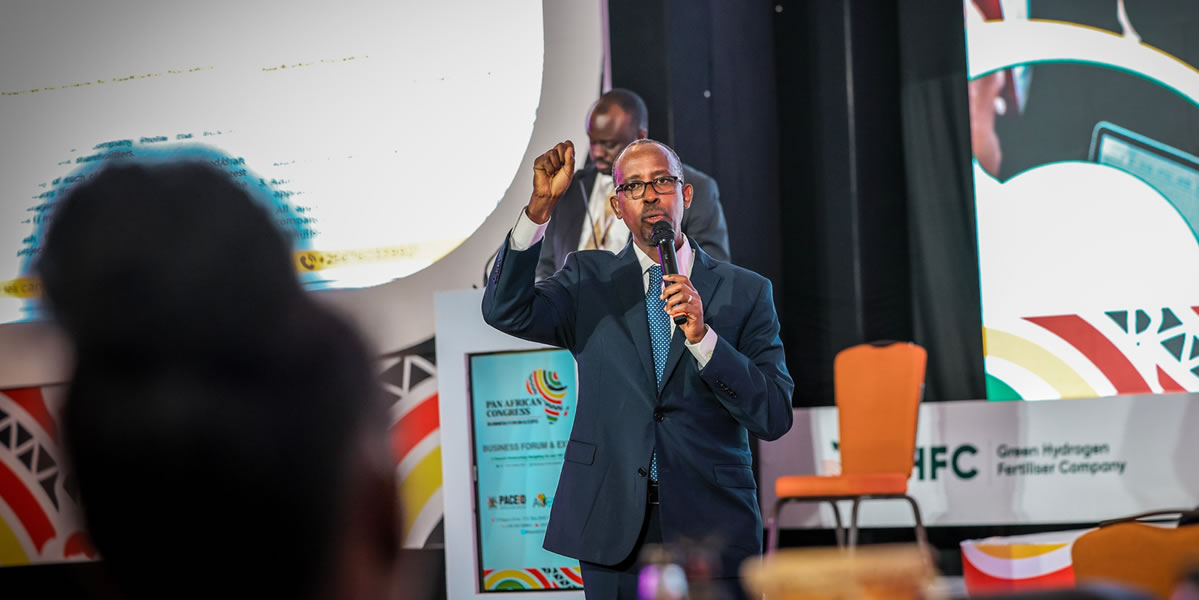
Odrek Rwabwogo Pan African Congress

I have followed Rwabwogo’s approach to societal transformation for a while now, through his online channels and his book, Fat Cats & African Farmers: Speeches & Stories. As an entrepreneur, I admire his commitment to transforming what could otherwise remain theoretical ideas into practical, market-ready goods, services, and leadership principles.

The term “transformation” has been thrown around a lot in our political discourse, but it has a more grounded meaning in science. Those with a bit of biology know about altering organisms in their genetic makeup(DNA), resulting in the acquisition of new traits, creation of new organisms. Chemistry demonstrates transformation when hydrogen and oxygen are seperated from water. Physics describes how matter changes states—solid, liquid, gas. The same logic that governs transformation in science also applies to transformation of society: real change requires a reconfiguration of the base structure. Rwabwogo uses the approach of ideological teachings and well-researched messaging to convey what Uganda’s economic transformation really needs —a change in mindset that begins at the family, individual to foster transformed citizens.

To give context, transformation here refers to moving Ugandan society from low productivity, high dependency, and ideological fragmentation to a state marked by high productivity, self-sufficiency, and a unified national ideology among political thinkers —differing only in methods, not vision. The goal is to enable the average citizen to make intellectual, economic, and cultural shifts, leading to a surge into the lower and upper middle-income population, through the production of standardised industrial goods, services & leadership practices.

Ideological Grounding is neccessary for Societal Transformation

Rwabwogo’s philosophy resonates with the great Western thinkers in its emphasis on substance over form. Its Uganda’s moment of the classical struggle before the first industrial revolutions in the west (18th – 19th century shift from manual production to manufacturing). Unlike populist leaders who manipulate ethnicity & poverty, Rwabwogo advocates transformation rooted in ideological clarity. For Uganda, the path of populism—appealing to ethnic identity, religious denomination identity, and to a less extent intellectual identity, has stiffled real development, much like how noise disrupts the focus needed in a scientific laboratory. Rwabwogo asserts that genuine transformation on a societal levelis about influencing behavior rather than merely enacting policies.

Our history is punctuated by phases of struggle. By the 1960s, the struggle had narrowed down to ending primitive colonialism. Ironically, while direct control of territory may have ended, the ideological colonialism persists in Uganda and in Africa.  In the 1980s, the battle evolved to confronting dictatorships & puppet governments. By 1990s the struggle centred on controlling the  exploitative elites who undermined genuine independence. Some opposition figures in Uganda partially understand the problem but often apply populist rhetoric that appeals to ethnicity, ignorance, social misery of the lower class and greed of the middle class. Without ideological clarity, political movements devolve into sectarianism, and divert people to unprincipled conflicts, as seen in our neighboring region.

The Work of Transformation: A Societal Laboratory

True transformation demands intellectual rigor. Reforming outdated educational curricula, schools, and universities is one step. Reforming culture to embrace a Pan-African view of ethnicity. Using software technology to implement transparency in local and national government processes to prevent corruption before it happens, rather than simply creating anti-corruption agencies.  The intellectual labor required for transformation, encompasses Ugandans contributing knowledge for national advancement in Political System, Economic System, Social and Cultural system, International Policy System

Resisting Foreign Exploitation

We must dismantle the structures left behind by imperialists that exploit trade, labor, education, and language for imperial gain, leaving African societies weakened. Transformation means dismantling these structures that persist in our systems. I recently read about President Museveni’s 1971 thesis, Fanon’s Theory of Violence: Its Verification in Liberated Mozambique, which reflects the ideological roots of the NRA/NRM movement. But now what is role of this ideology, in the context of ruling a complex, industrialising Uganda.

For Uganda to progress, every citizen must be invested in the intellectual work of transformation. Only through widespread, rooted ideological understanding can violence cease to be the default mechanism for peace. Whether it’s Nyanzi’s literary protests or Kyagulanyi’s ethno-nationalistic rallies, these by themselves do no solve the inherent need for comprehensive societal transformation. It is one thing to know

Muhoozi vs. Rwabwogo

Ugandan millennials like the gossip columns, better than serious textbooks. But I’m sorry this article isn’t about the publicized spats between Rwabwogo and Gen. Muhoozi Kainerugaba. It’s about the ideology each represents. I read Battles of the Ugandan Resistance: A Tradition of Maneuver by Muhoozi Kainerugaba—a well-written Ugandan military book that reads a lot like an autobiography of Gen. Salim Saleh and Fred Rwigyema, linking seamlessly with other works like Uganda’s Revolution, 1979-1986: How I Saw It by Pecos Kutesa and Sowing the Mustard Seed by Yoweri Kaguta Museveni. These books shed light on the ideology and decisions that built the UPDF into one of Africa’s greatest armies.

For true transformation, however, Uganda needs more than military reform. Scientists, technologists, business leaders, cultural and religious figures, and psychologists each play a role. Each sector must produce reformists who align with Rwabwogo’s ideological approach. Detractors claim he is overstepping long-established institutions, yet these institutions, with their lack of tangible societal impact, have no “performance authority.” Part of transformation by necessity includes dismantling old structures handed to us by those with imperial interests, now led by “intellectuals” who lack original thought.

Addressing Uganda’s “Knowledge” Deficit

Unfortunately, many Ugandans don’t read to know—they simply “know things!” This focus on hearsay overshadows substantive issues. In these books, you’ll find the ideas that built UPDF and Uganda into their current forms.

Globally, the U.S. and China clash over intellectual property, with military and economic tensions regarding alleged theft of American intellectual capital. Meanwhile, the U.S. exploits foreign countries’ resources while luring intellectuals to its borders, effectively appropriating intellectual property.

Arab societies, for example, thrive by upholding a unified religious ideology. Asian societies are more organized due to their emphasis on hard work and academic excellence. Europeans adopted an imperialist ideology. Uganda, too, needs a unifying ideology to truly transform society.


Summary and Conclusions

  • The Problem: Ugandan society suffers from low productivity and income. Politicians often exploit ethnicity for leadership, hindering progress.
  • The Solution: Focus on ideological change, akin to scientific transformation seen in biology, chemistry, and physics. Citizens must understand their roles in societal transformation.
  • The Rwabwogo Factor: Emotion- or ethnicity-based political approaches are flawed; Rwabwogo’s intellectual approach offers a refreshing alternative.
  • Historical Context: Past struggles for independence (1962) and democracy (1986) were incomplete. Colonial structures persist and must be dismantled.
  • The Opposition: While some opposition figures understand the problem, they falter by relying on populist ethnic nationalism.
  • The Need for Action: Uganda needs citizens who understand the problems and actively seek solutions, as Rwabwogo does.
  • Colonial Legacy: Colonial systems of exploitation linger, distorting education and resource use.
  • Museveni’s Thesis: Museveni’s work on Frantz Fanon highlights the risks of violence without ideological transformation.
  • Cultural Deficiency: Our cultural environment doesn’t promote critical thinking, an essential component of transformation.

Conclusion: Uganda needs a movement for ideological education to empower citizens in driving societal transformation.

Frank Birondwa M.
Pan African, Entrepreneur
birondwa@revolutionmedium.com

Loading

Continue Reading

Trending

pendik escort kartal escort beylikduzu escort şirinevler escort